Epoxy Coverage Chart — Every Thickness, Every Brand (CSV Download)
The full epoxy coverage chart: theoretical 1604-rule coverage from 1/16" to 2", plus every published brand rate in our library with verification status — CSV download included.
Quick answer
One gallon covers 25.7 sq ft at 1/16", 12.8 sq ft at 1/8", 6.4 sq ft at 1/4" (100% solids theory). Brands publish their own tested rates around those numbers — the chart below is the complete side-by-side: theory first, then every published rate in the library with its thickness, basis and verification status. The whole thing downloads as CSV for shopping math.
Manufacturer datasheet · 2026-11-07A · Theoretical baseline (100% solids)
The 1604-rule: coverage = 1604 ÷ thickness (mils). What a perfect, waste-free gallon covers — every brand's chart bends around these numbers.
| Thickness per coat | Coverage (sq ft/gal) | Coverage (m²/L) | 100 sq ft needs |
|---|---|---|---|
| 1/16" | 25.7 | 0.63 | 3.90 gal |
| 3/32" | 17.1 | 0.42 | 5.84 gal |
| 1/8" | 12.8 | 0.31 | 7.79 gal |
| 3/16" | 8.56 | 0.21 | 11.69 gal |
| 1/4" | 6.42 | 0.16 | 15.58 gal |
| 1/2" | 3.21 | 0.08 | 31.17 gal |
| 1" | 1.60 | 0.04 | 62.34 gal |
| 2" | 0.80 | 0.02 | 124.68 gal |
B · What every brand publishes
Every published rate in our brand library — 18 products from 8 manufacturers, each cited to its official page with a Last Verified date. "derived" = converted from the brand's own calculator formula or kit coverage, never invented. No brand published no-chart rates here: brands without a chart (Promise, SCC Ultra Deep, KSResin Liquid Cast) fall back to the labeled theoretical baseline in the calculator.
| Brand — product | Coat / basis | Thickness | sq ft/gal | Source status |
|---|---|---|---|---|
| TotalBoatTotalBoat TableTop Epoxy | flood coat | 0.125" | 12.8 | dual |
| flood coat | 0.25" | 6.4 | dual | |
| seal coat (brushed thin layer) | — | 24 | dual | |
| TotalBoatTotalBoat ThickSet Cast + Coat | pour | 0.5" | 3.2 | dual |
| seal coat (brushed thin layer) | — | 24 | dual | |
| TotalBoatTotalBoat Fathom Deep Pour | pour | 3" | 0.75derived | dual |
| Stone Coat CountertopStone Coat Countertop Epoxy (original) | flood coat (calculator basis) | — | 20 | dual |
| Stone Coat CountertopWoodshop Epoxy Ultra Deep Pour | no published chart | — | — (theoretical applies) | |
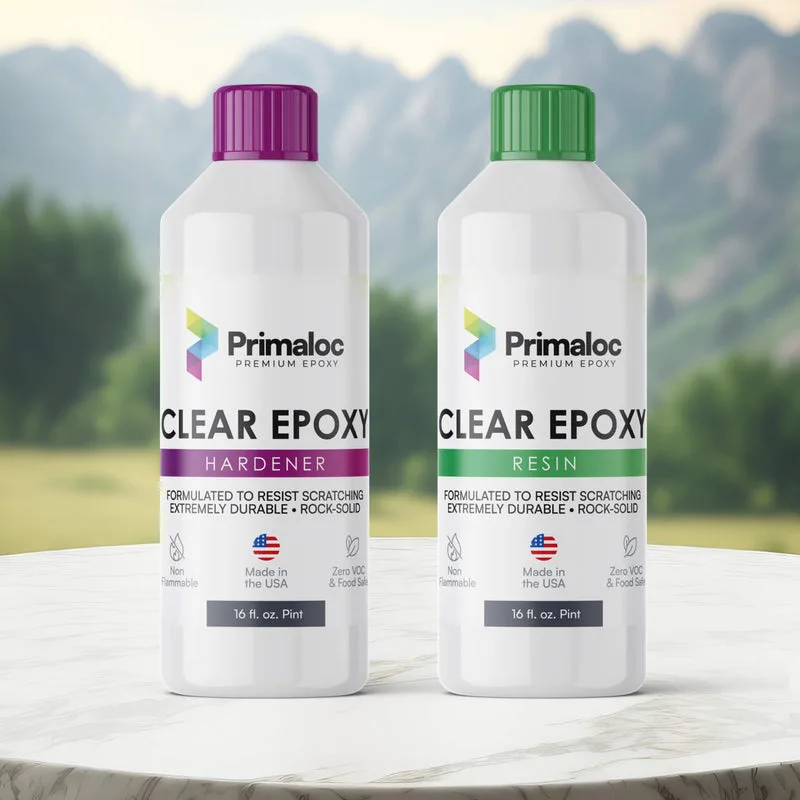
| Primaloc EpoxyPrimaloc Bar & Table Top Epoxy | flood coat | 0.125" | 16 | dual |
| seal coat (brushed thin layer) | — | 48 | dual | |
| Primaloc EpoxyPrimaloc Deep Pour Epoxy | pour | 0.25" | 6.67derived | dual |
| pour | 0.5" | 3.33derived | dual | |
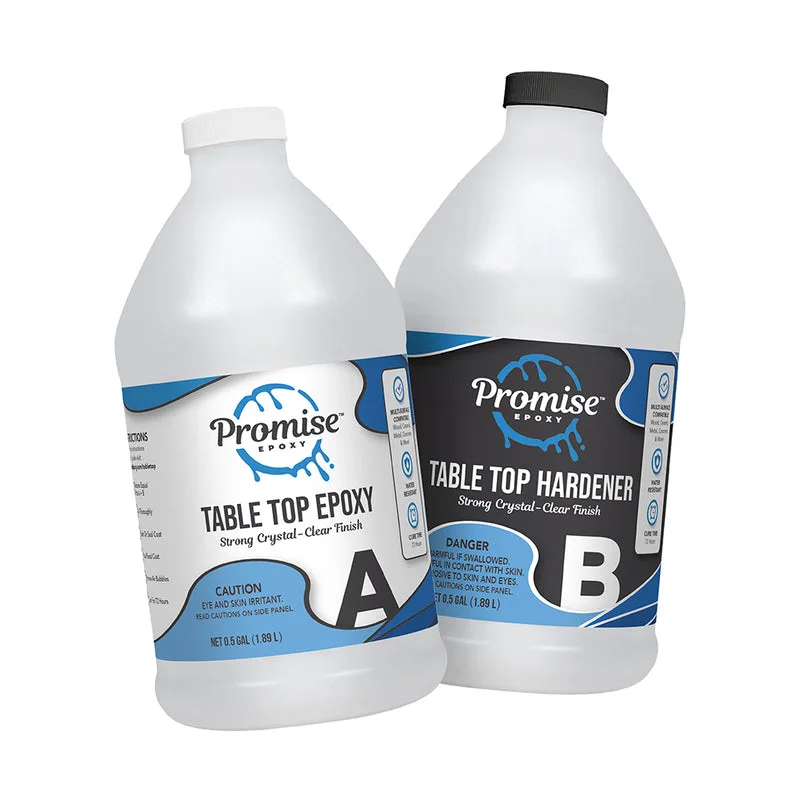
| Promise EpoxyPromise Table Top Epoxy Resin | no published chart | — | — (theoretical applies) | |
| Promise EpoxyPromise Deep Pour Epoxy Resin | no published chart | — | — (theoretical applies) | |
| KSResinKSResin Liquid Stone Elite | coating (calculator basis) | 0.0625" | 26.1derived | dual |
| KSResinKSResin Liquid Cast Deep Pour | no published chart | — | — (theoretical applies) | |
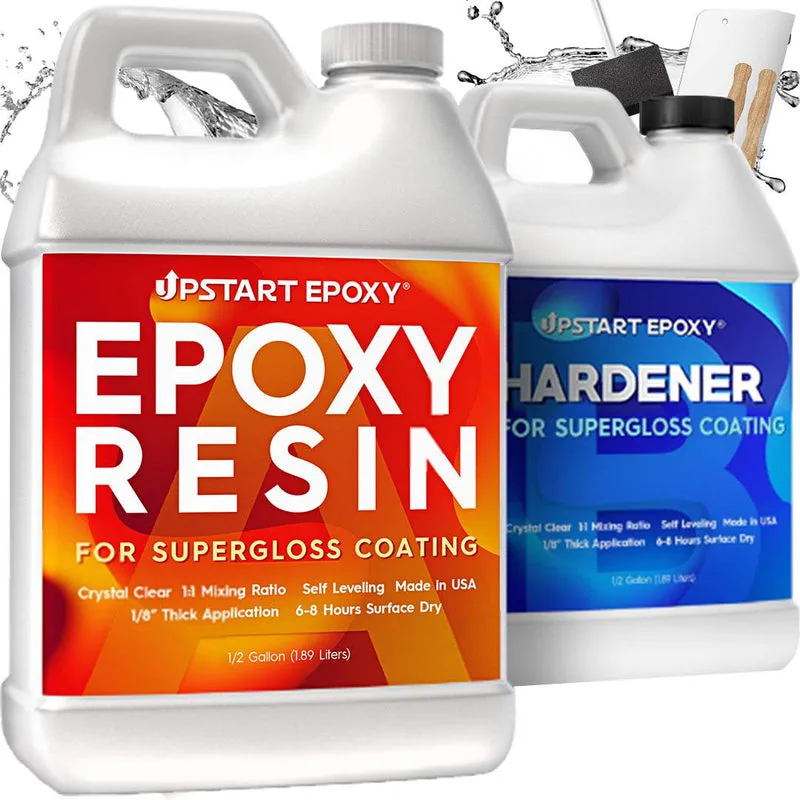
| Upstart EpoxyUpstart Table Top Epoxy | flood coat (calculator basis) | 0.125" | 12.8derived | dual |
| seal coat (calculator basis) | 0.0625" | 25.7derived | dual | |
| Upstart EpoxyUpstart Deep Pour Epoxy | no published chart | — | — (theoretical applies) | |
| EcopoxyEcopoxy FlowCast | no published chart | — | — (theoretical applies) | |
| EcopoxyEcopoxy UVPoxy | no published chart | — | — (theoretical applies) | |
| EcopoxyEcopoxy FlowCast SPR | no published chart | — | — (theoretical applies) | |
| West SystemWest System 105 Resin / 205 Fast Hardener | saturation coat (porous surfaces) | — | 291.7derived | single |
| West SystemWest System 105 Resin / 206 Slow Hardener | saturation coat (porous surfaces) | — | 291.7derived | single |
How to read the two tables
Table A (theory) is the fixed physics: thickness trades linearly against area, always. It answers "what could one gallon possibly do" and converts cleanly to m²/L for metric shopping.
Table B (published) is the reality layer: what each manufacturer actually tested and printed. Three statuses matter:
- published chart — a real coverage figure on an official page (TotalBoat's 12.8/6.4/24, Primaloc's 16/48). Use it for that product; it wins over theory.
- derived — the brand publishes a calculator formula or kit coverage instead of a chart (Stone Coat's ÷20 basis, KSResin's 0.034 oz/sq-in, Upstart's 231-in³-calibrated calculator). We converted, labeled it derived, and show the formula it came from.
- no published chart — the brand publishes nothing usable (Promise, Stone Coat Ultra Deep, KSResin Liquid Cast). Those rows say so honestly; the calculator applies the theoretical baseline to them, labeled, rather than inventing a number.
Using the chart offline
The CSV carries every row above plus source URLs — drop it into a spreadsheet, add a column for your project area, and each brand's gallons and cost compute with two formulas. That is the whole shopping workflow: gallons = area × coats × 1.10 ÷ rate, then price at the brand's kit sizes from the cost calculator. For the volume-side walk-through — how many coats, which thickness for which project — start at how much epoxy do I need, and for per-product spec sheets go to the epoxy brands library.
Why rates differ between brands
Solids content, viscosity and the film thickness the rate assumes all shift the number — a thin self-leveling flood covers more ground than a thick build coat, and a lower-solids blend leaves less film per gallon. What never changes is the physics behind them all: 231 cubic inches per gallon. Any rate that strays far from 1604 ÷ thickness at its stated film depth is marketing, not measurement — the chart makes those gaps visible instead of burying them in brochure prose.
The spread across this page is worth internalizing: West System's marine saturation coats compute to roughly 292–338 sq ft/gal (thin film on porous glass work), Primaloc's brushed seal coat publishes 48, the tabletop flood rates cluster at 12.8–20, and deep-pour casting runs 6.7 and below. That is a 40× span inside one material category — driven almost entirely by film thickness, which is why every rate on this page is pinned to its thickness or marked as untagged. When a supplier quotes you "covers about 300 square feet", the only useful follow-up question is at what thickness — the answer moves the product from the floor class to the coating class of this chart.
FAQ
What is the standard epoxy coverage per gallon?
The industry baseline is the 1604 rule — coverage (sq ft/gal) = 1604 ÷ thickness in mils at 100% solids. That gives 25.7 sq ft/gal at 1/16", 12.8 at 1/8", 6.4 at 1/4". Published brand rates sit near the theory: TotalBoat TableTop matches it exactly (12.8), Primaloc's flood rate runs thinner-film (16), Stone Coat's calculator basis runs thicker (20).
Why is Primaloc's flood rate higher than the theory?
Because a self-leveling flood coat often settles slightly thinner than a nominal 1/8" film, and brand charts quote what their own testing produced. Primaloc's chart is internally consistent — 1 gal = 16 sq ft flood, 48 sq ft brushed seal — and dual-verified on two official pages. Where brand and theory disagree, use the brand number for that brand's product.
How do I convert sq ft/gal to liters and m²?
1 US gallon = 3.785 L and 1 m² = 10.76 sq ft, so sq ft/gal ÷ 10.76 × 3.785 = m²/L. The theoretical 12.8 sq ft/gal at 1/8" is therefore 1.19 m²/L — the chart below carries the conversion in its own column so you never hand-convert at the store.
Is the CSV the same data as the tables?
Yes — it is generated from the same brand-library JSON as the tables on this page (nothing hand-copied), including the derived-vs-published flags and verification status. Regenerated whenever a datasheet is re-verified, with the date in the file header.
All guides
Related pages