Epoxy Mix Ratio Calculator — Split Any Total Into Exact Part A & B
Enter your total mixed volume and the A:B ratio — get exact Part A and Part B amounts in gallons, quarts, fluid ounces, liters or milliliters, with the volume-vs-weight trap explained.
Quick answer
Part A = total × A/(A+B), Part B = total × B/(A+B). A 2-gallon total at the deep-pour standard 2:1 splits into 1.33 gal resin + 0.67 gal hardener; at the tabletop standard 1:1 it is simply 1 gal + 1 gal. Measure on the basis your datasheet states — volume by default, weight only when the datasheet gives a weight ratio. The calculator below does the split in five units and shows the percentage bar so you can sanity-check by eye.
Manufacturer datasheet · 2026-11-07Why the ratio is sacred
Epoxy cures by a chemical reaction, not by drying: every hardener molecule must find resin molecules to react with. The mix ratio encodes that stoichiometry. Drift off-ratio in either direction and the reaction is left incomplete:
- Hardener-heavy mixes cure fast, run hot, shrink, amber badly and end brittle.
- Resin-heavy mixes stay soft or tacky forever — the classic "my epoxy never dried" failure, almost always a measuring error rather than a bad batch.
This is also why "just add a splash more hardener to speed it up" is the most expensive folk wisdom in the craft. Speed comes from warmth (the datasheet's minimum temperature), never from the ratio.
Volume vs weight: the two-basis trap
The same product can carry two different ratios. Real examples from the brand library:
| Brand — product | Volume ratio | Weight ratio |
|---|---|---|
| TotalBoat TableTop | 1:1 | 1.2:1 |
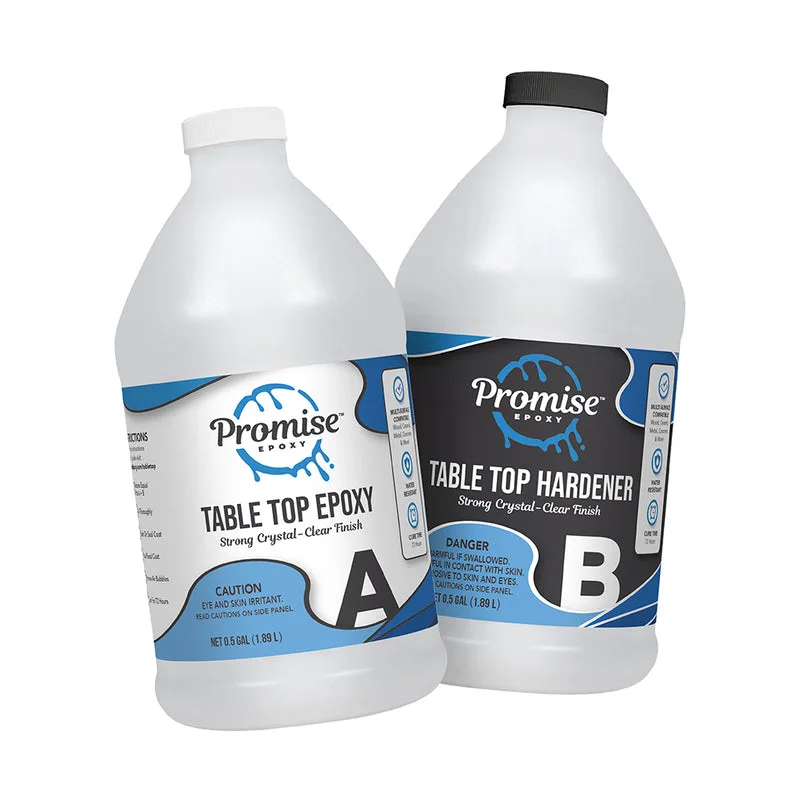
| Promise Table Top | 1:1 | 100:83 (≈1.2:1) |
| TotalBoat Fathom | 2:1 | 100:44 (≈2.3:1) |
| KSResin Crystal Cast | 2:1 | — (volume stated) |
The pattern: resin is denser than hardener, so equal volumes are unequal weights. Measure by volume with graduated containers unless the datasheet explicitly gives you a weight ratio — and even then, use a digital scale with a tare function, zeroing between parts.
Ratio chips in the calculator
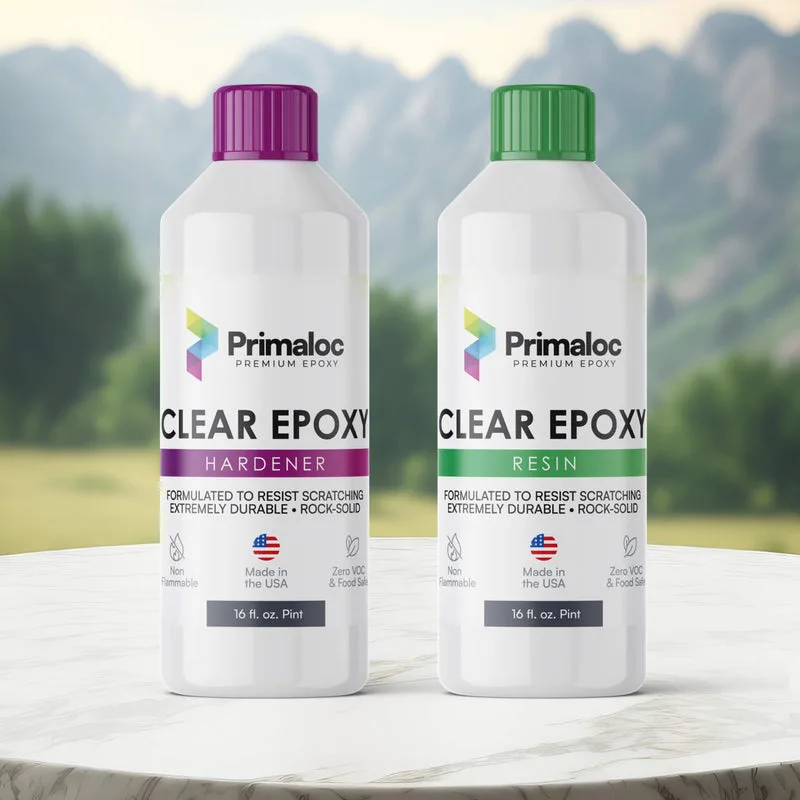
The chips cover the systems you will actually meet: 1:1 (nearly all tabletop resins), 2:1 (most deep pours — TotalBoat Fathom, Primaloc Deep Pour, Upstart Deep Pour, Stone Coat Ultra Deep), 3:1 and 4:1 (some marine and industrial systems), 5:1 (West System 105/205 style) and 100:45 (weight-basis specials). Custom fields accept any two numbers. If your product isn't listed, read its datasheet — the ratio is always on page one, and our brand pages quote it with the source. Whatever the ratio, the pot life clock starts the moment the two parts touch: mix fully, pour promptly, and never leave mixed epoxy standing in the cup longer than the datasheet's work time.
From ratio to pour
The coverage calculator already splits A and B for you in the result card once gallons are known. This page exists for the reverse flow — you have a partial kit, a mold with a known volume, or a resin art session where you only want to mix what you can use inside the pot life. Same math, same honesty: exact splits, no rounding down. For the step before the split — how many gallons the project needs in the first place — the how much epoxy guide and the epoxy brand spec tables carry the numbers.
FAQ
What does 2:1 epoxy mean?
Two parts resin (Part A) to one part hardener (Part B), measured the way the datasheet states — almost always by volume for deep-pour resins. A 1.5-gallon total mix at 2:1 is exactly 1.0 gallon of resin plus 0.5 gallon of hardener. Off-ratio mixing is the leading cause of epoxy that stays soft, sticky or never fully cures.
Can I measure epoxy by weight instead of volume?
Only if your datasheet gives a weight ratio, because resin and hardener have different densities. Promise Table Top, for example, is 1:1 by volume but 100:83 by weight — their FAQ says outright not to weigh it. TotalBoat TableTop is 1:1 by volume but 1.2:1 by weight. The calculator splits both bases; the volume basis is the safe default.
How do I split a kit that isn't a round number?
Work in one unit. A Primaloc 1-gallon combined kit is 1/2 gallon resin + 1/2 gallon hardener; a KSResin Crystal Cast 48-oz kit is 32 oz resin + 16 oz hardener (2A:1B). If you only need half the kit, halve both sides — the ratio, not the kit, is what must stay exact.
Does ratio accuracy really matter that much?
Yes — it is the one error that ruins the whole batch. Too much hardener and the cure runs hot, brittle and amber; too little and the surface stays tacky for days. Graduated cups or ratio pumps make it a non-issue; eyeballed restaurant cups do not. Mix for the full time the datasheet states (usually 2–3 minutes) and scrape the cup walls once.
All tools
Related pages