Bar Top Epoxy — Thickness, Durability & Gallons
Bar top epoxy done right: 1/8" flood coats, build coats for depth, edge coverage math, published brand rates, and the honest limits every bar owner should plan for.
Quick answer
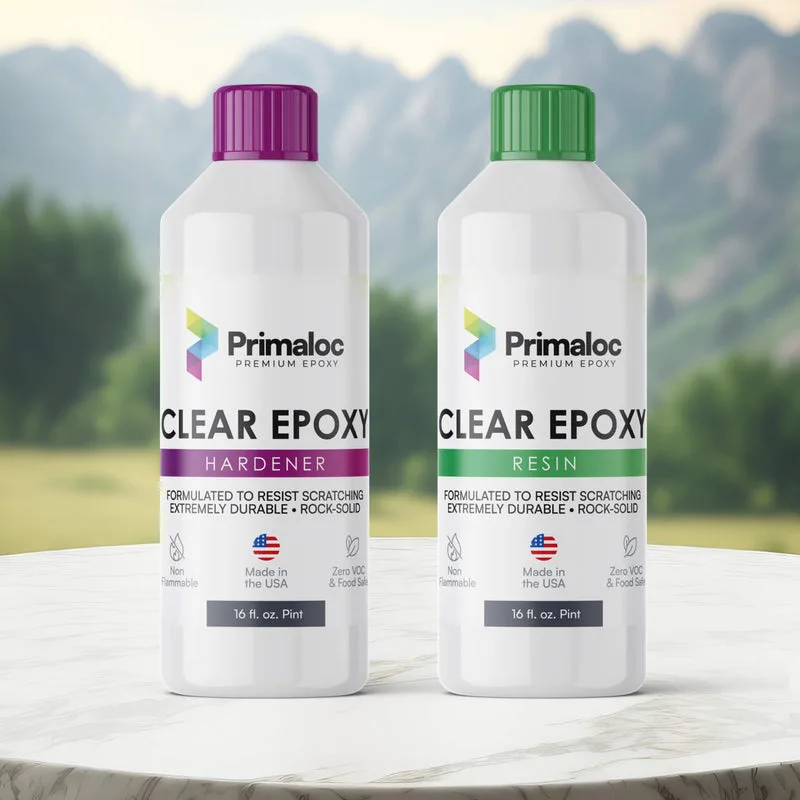
Bar top math = top area × coats × 1.10 ÷ rate, plus edges. A 7 ft × 24" top at Primaloc's dual-verified 16 sq ft/gal flood rate is 0.96 gal flooded; one 1-gal kit covers seal + flood. Add bullnose edges and a front apron and you're at ~1.3 gal — the 2-gal kit. The calculator below runs your bar's real dimensions; the notes below cover the parts calculators can't: heat rings, edges and drips.
Manufacturer datasheet · 2026-11-07Bars are edges, not just tops
A bar top's math differs from a kitchen counter in one way: perimeter. A 7 ft bullnose edge (0.75" wide × 84" long ≈ 0.44 sq ft per edge face, both faces if the nose wraps) plus a 4" front apron adds ~2.5–3.5 sq ft to a 14 sq ft top — 20% more epoxy that a flat-area estimate misses. Measure the top, then walk the edge with a tape and add it. Drips under the nose are part of the look (or get sanded before the flood if you want crisp lines — the datasheets' recoat windows cover the schedule).
Build depth without cracking it
Depth on a bar is a look — the thick glass-like edge. The safe way up:
- Seal coat on bare wood (half the flood rate per gallon).
- Flood coat at 1/8" — the self-leveling workhorse.
- Build coats at the datasheet's per-coat cap — TotalBoat TableTop 1/4" per coat, ThickSet 1/2", inside the recoat window (3 h / ≥4 h respectively) so layers bond chemically.
Total film past ~1/2" is diminishing returns: heavier cost, longer cure, more shrinkage stress. The "thick glass" look is usually a 1/4–3/8" total film over a shaped substrate, not a half-inch pour.
What bars actually do to epoxy
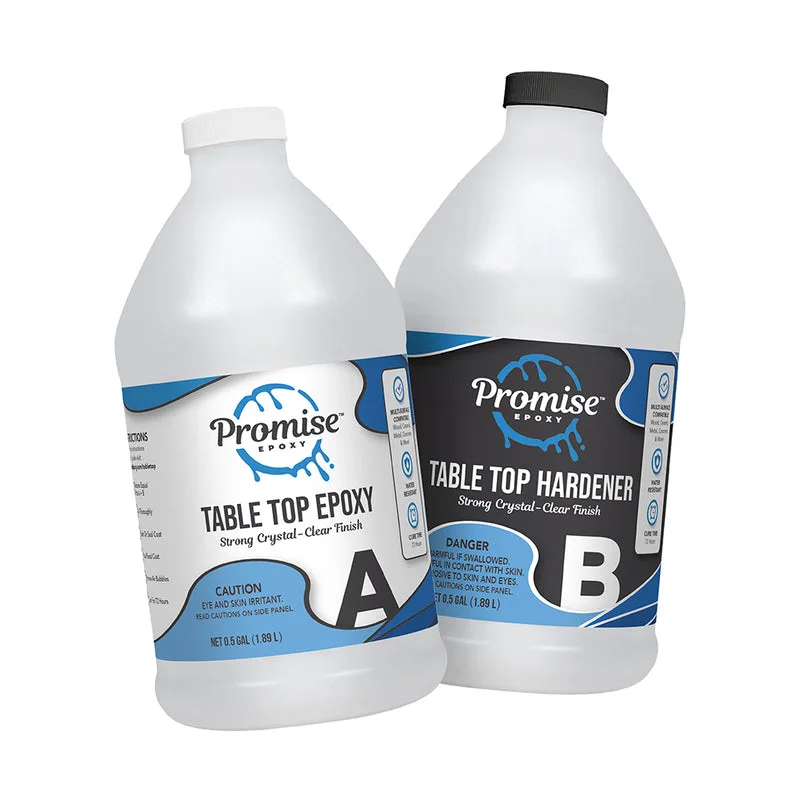
- Heat rings come from 150 °F+ contact, not warm glasses. Trivets under anything from the stove; the datasheets' 130 °F claims (Promise TDS) are about the cured film, not license.
- Alcohol and mixers wipe off cured epoxy without damage — prolonged pooling (a spilled cola overnight) can dull the gloss. Wipe at closing; that's the whole maintenance routine.
- UV yellows unprotected resin; the UV-stabilized tabletop formulas resist it, and window-adjacent bars should prefer them (Promise, TotalBoat, KSResin Elite all claim it in writing).
- Scratches polish out: wet-sand 400 → 800 → 1200 and re-gloss with a thin flood — one of epoxy's real advantages over lacquer.
The kit decision, priced honestly
A 14 sq ft bar runs from $48 (Promise at $61/gal, theoretical rate) to $127+ (Stone Coat kit pricing) for the same flood coat — the cost calculator prices your exact square footage across all brands, the coverage chart lists every rate behind those numbers, and the brand hub carries the spec tables with sources. Same physics, different receipts.
FAQ
How thick should a bar top epoxy coat be?
A single flood coat self-levels to about 1/8" — the standard bar top film. Depth comes from build coats: TotalBoat TableTop allows 1/4" per coat, ThickSet 1/2", and layered pours inside the recoat window stack without sanding. There is no structural benefit past ~1/4" of total film — beyond that you are pouring depth for looks, and paying by the gallon for it.
How many gallons for a 7 ft bar top?
A 7 ft × 24" top is 14 sq ft. At Primaloc's published flood rate (16 sq ft/gal): 14 × 1.10 ÷ 16 = 0.96 gallons flooded, plus a seal coat on bare wood at 48 sq ft/gal = 0.32 gallons — one 1-gal kit covers both coats comfortably. At TotalBoat's 12.8 rate the flood alone is 1.20 gallons: buy the 2-gal kit.
Will epoxy survive hot glasses and booze?
Warm mugs yes, hot pans no. Datasheets claim heat tolerance from 130 °F (Promise Table Top TDS) upward — a fresh-poured glass of whiskey is fine, a cast-iron skillet leaves a ring. Cured epoxy also resists alcohol spills (wipe them up anyway) and is food-safe once fully cured for cutting-adjacent service.
Does bar top epoxy yellow?
Non-UV-stabilized resin does, especially under bar lighting and window sun. Modern tabletop formulations (TotalBoat, Promise, KSResin Elite) carry UV inhibitors, and the datasheets that claim yellowing resistance say so explicitly — Promise's TDS lists 'U.V. Resistant Formula'. For sun-drenched patios, a marine spar-urethane topcoat outperforms any epoxy.
All projects
Related pages