Epoxy Coverage Calculator — Gallons by Brand, Area & Thickness
Pick a brand, enter area and pour depth — get gallons needed, the A/B mix split, kit rounding and a cost estimate, using each brand's published coverage rate or the 1604-rule baseline.
Quick answer
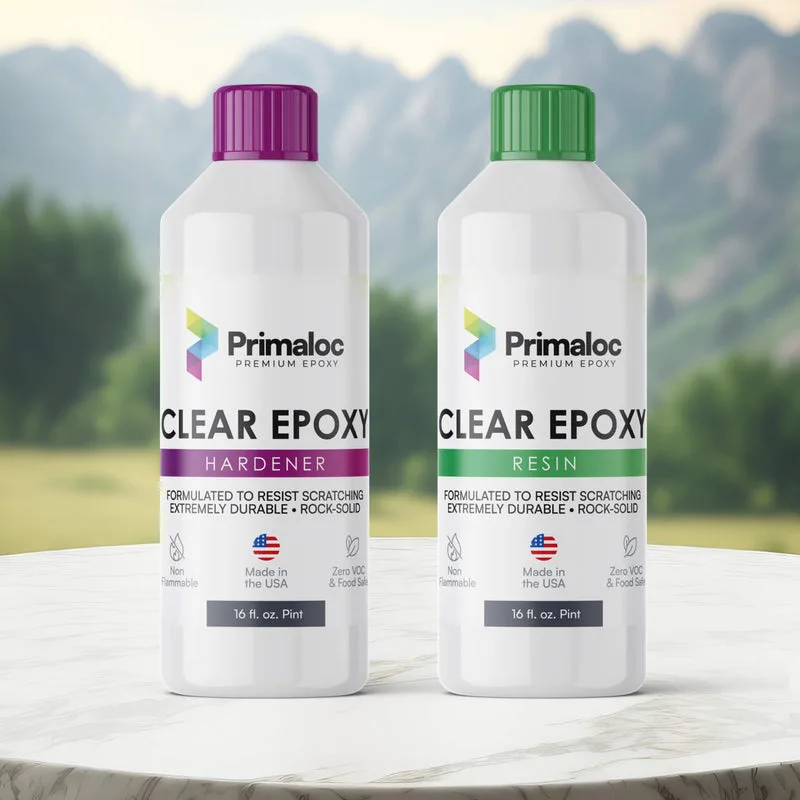
Gallons of epoxy = project area × coats × 1.10 waste ÷ coverage rate. The coverage rate is where brands differ: TotalBoat TableTop publishes 12.8 sq ft/gal at 1/8", Primaloc publishes 16 sq ft/gal for its flood coat, and brands with no published chart get the theoretical 12.8 sq ft/gal baseline (100% solids). A 40 sq ft countertop at 1/8" needs about 3.4–3.9 gallons depending on the brand — one flood coat, including waste. The calculator below runs the math at your exact numbers and shows which rate it used.
Manufacturer datasheet · 2026-11-06How the math works
One US gallon is exactly 231 cubic inches. Spread over one square foot, that is a depth of 1.604 inches — which is where the industry-standard coverage formula comes from:
coverage (sq ft/gal) = 1.604 ÷ thickness (inches)
                     = 1604 ÷ thickness (mils) × solids %
The coatings industry calls this the 1604 rule. At 1/8" (125 mils) of 100%-solids epoxy it gives 12.8 sq ft/gal; at 1/16" it gives 25.7. Manufacturers' published rates land near the theory but not exactly on it — Primaloc's flood coat covers 16 sq ft/gal where pure theory says 12.8, because their chart assumes a slightly thinner self-leveled film and a brushed seal coat covers 48 sq ft/gal where theory says 25.7. That gap is exactly why the calculator uses published rates first and marks the theoretical baseline clearly when it has to fall back.
What each input changes
- Product. Choosing a brand switches the coverage rate, the mix ratio split, the kit sizes for rounding, and the price. Choosing "no brand yet" runs the neutral 100%-solids baseline — useful when you're still comparing brands.
- Mode. Coating (area × thickness) is for countertops, bar tops, floors and seal/flood coats. Deep pour (length × width × depth) is for river tables and casting, where volume ÷ 231 is the physically exact method and the calculator warns when your depth exceeds the datasheet's single-layer cap.
- Thickness. The chips are the trade's common coats: 1/16" seal coats and floor rollers, 1/8" flood coats, 1/4" build coats. Custom values are allowed — the formula is linear, so 3/32" simply lands between the 1/16" and 1/8" cells of the coverage chart.
- Coats. Bare wood always wants two: a thin seal coat (brushed, roughly half the flood-coat coverage per gallon) that soaks in and outgasses, then the flood coat. Two coats at 1/8" each on 40 sq ft is a different number than one coat — the calculator multiplies for you.
Reading the result honestly
Every result card states which rate it used and where it came from — published (cited to the brand's own pages, dual or single verified) or theoretical (the 1604 baseline, no brand chart available). Neither number is a promise: surface texture, porosity, temperature and your own pouring discipline move real coverage 10% either way. Treat the output as a planning floor, buy the rounded-up kit, and if you are within half a gallon of a kit boundary, size up — mixed epoxy waits for no one.
Related tools
The mix ratio calculator splits any total volume into exact Part A and Part B amounts once you know your gallons; the cost calculator prices the same job across every brand side by side. For worked examples by project type, start at how much epoxy do I need.
FAQ
How does the calculator pick the coverage rate?
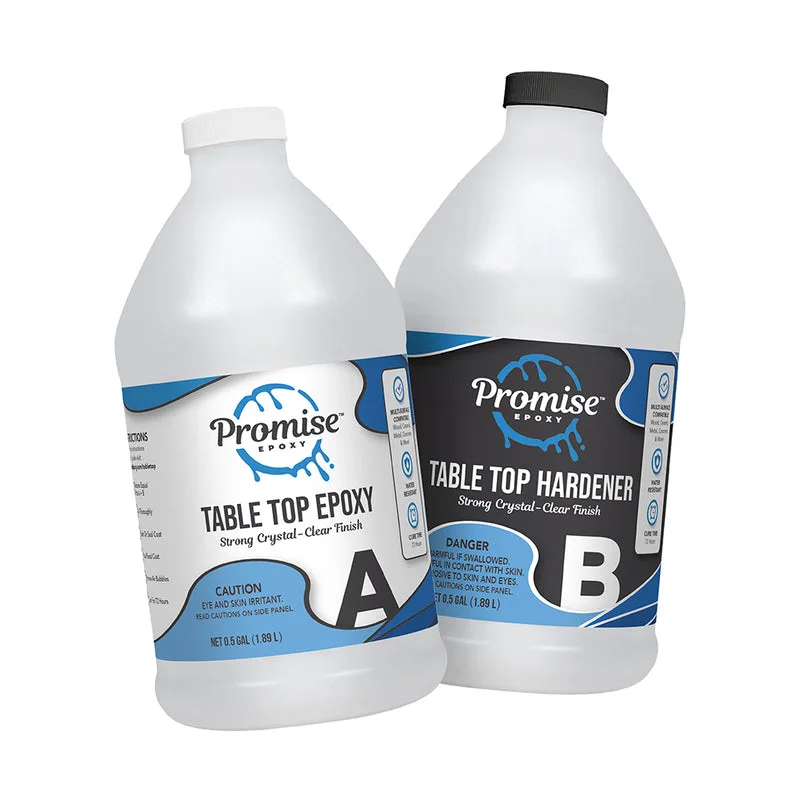
If the brand publishes a coverage chart (like TotalBoat's 12.8 sq ft/gal at 1/8", dual-verified on their product page and TDS), that published rate is used and cited. If the brand publishes nothing — Promise Epoxy and Stone Coat's Ultra Deep Pour, for example — the calculator falls back to the 1604-rule theoretical rate at 100% solids (or the brand's stated solids), and the result is labeled 'theoretical' so you know it's physics, not the datasheet.
What is the 1.10 waste factor?
Real pours lose material to mixing-cup residue, sidewalls, drips and surface profile that eats into the first coat. A 10% allowance is the common planning cushion; the calculator adds it automatically and shows it in the assumptions list. Skip it only if you are pouring into a perfectly flat sealed mold.
Can I calculate in metric?
Yes — switch the area input to m² and the result converts both ways: gallons and liters are shown together, and thickness stays in inches (the unit every US datasheet uses). Metric pours for deep casting should still use the inch-based depth caps from the datasheet.
Why does the result show both a kit count and a raw gallon number?
The raw gallon number is the physics answer; the kit count is the shopping answer. Epoxy ships as fixed kit sizes (1 gal, 1.5 gal, 2 gal, 3 gal…), and running short mid-pour is unfixable — the kit line rounds up to the smallest real purchase that covers your job, priced at the brand's own checkout rate.
All tools
Related pages